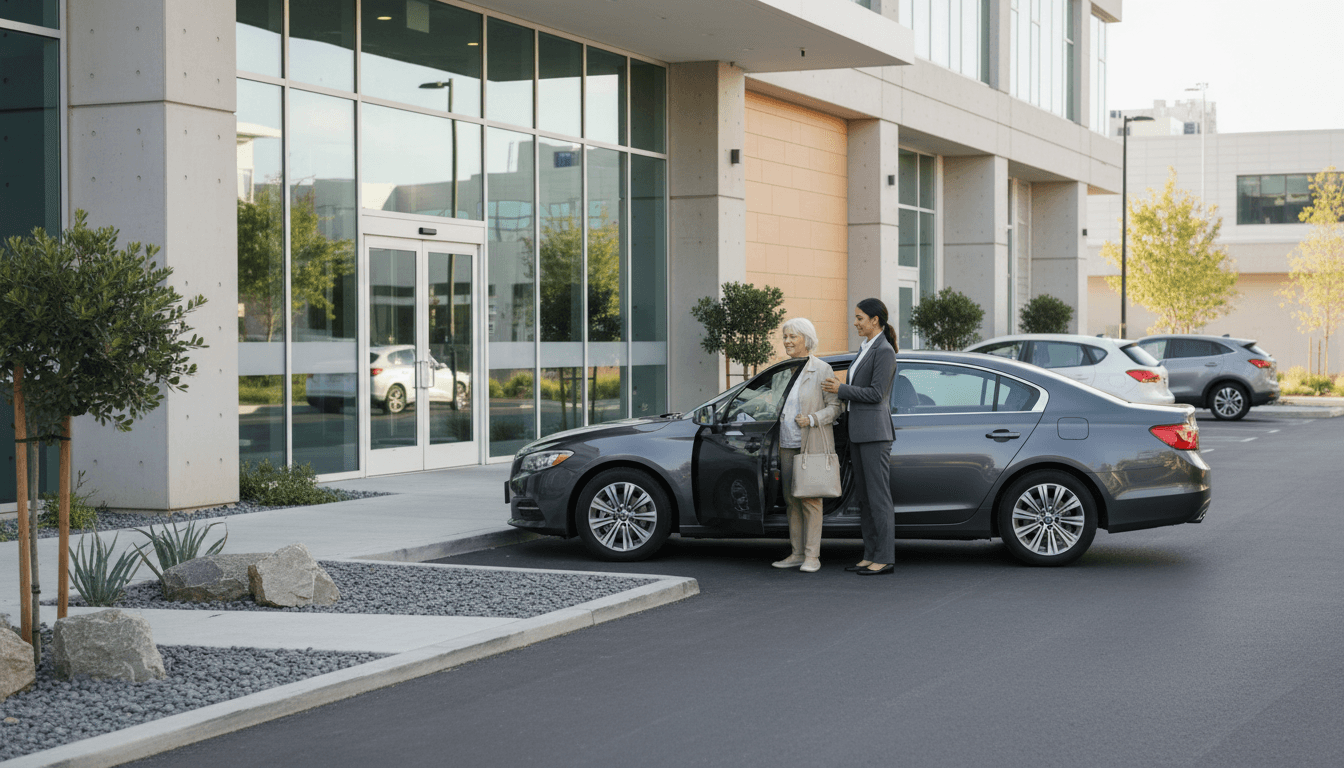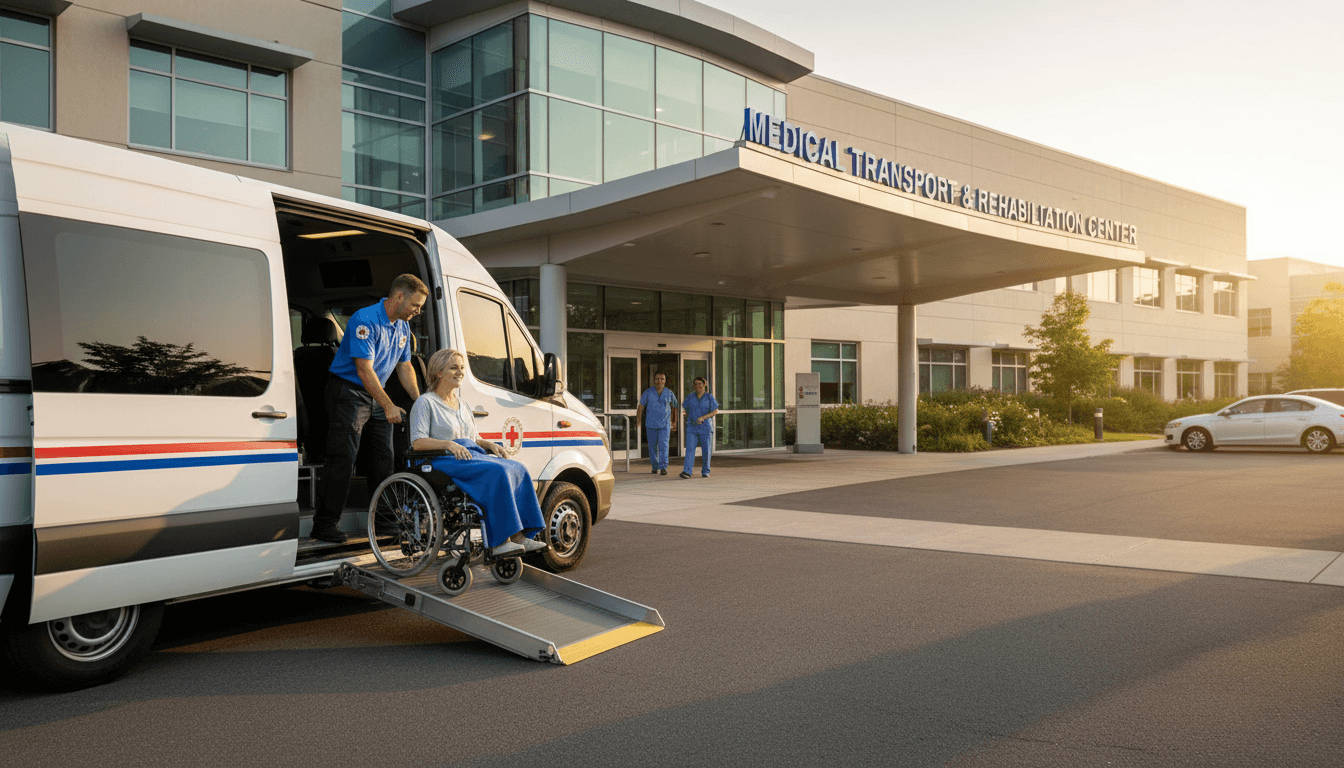

Securing a responsible adult or professional medical transport service is essential for transportation after outpatient procedure Orange County because sedation makes driving unsafe. Patients can choose from specialized providers like Amera or Dream Care Rides, which offer the door-to-door supervision required by surgical facilities. These dedicated services ensure a safe arrival home while meeting all medical discharge criteria.
Scheduling a procedure at a premier facility in Newport Beach or Irvine should be the primary focus, yet many patients discover that securing a safe ride home is the most challenging logistical hurdle. Surgical centers throughout Orange County strictly enforce the responsible adult requirement; they will often cancel an appointment if a patient plans to use a standard rideshare service. This policy remains non-negotiable because anesthesia impairs judgment and physical coordination long after you leave the recovery room. Relying on an untrained driver or a friend who may be unprepared for your post-operative needs can jeopardize your safety during those critical first hours of recovery. This guide explains why Uber and Lyft are unsuitable for post-sedation care, the specific risks of residual anesthesia, and how RideRx provides the professional oversight necessary to ensure you arrive home safely and comfortably.
The Responsible Adult Requirement for Outpatient Procedures

Patients arriving at major medical centers in Orange County, such as Hoag Hospital in Newport Beach or MemorialCare facilities, often encounter a strict gatekeeping requirement before their procedure even begins. If you are undergoing a treatment involving sedation or general anesthesia, the facility will mandate that a responsible adult is present or confirmed at the time of check-in. This is a non-negotiable safety protocol designed to mitigate medical and legal liability for the surgical center.
There is a critical distinction between simple transit and the specific definition of a responsible adult as defined by medical facilities. While a ride gets you from point A to point B, a responsible adult is a designated individual who assumes physical and legal responsibility for the patient during the vulnerable hours following anesthesia. Medical facilities require this person to be present at discharge to receive recovery instructions, sign official paperwork, and assist the patient into their residence. This ensures the patient is not left unattended while their judgment and motor skills are still impaired by medications like Propofol or Midazolam.
The financial and emotional cost of ignoring this requirement is high. If a patient arrives at an Orange County surgery center without a confirmed, qualified driver, the procedure is typically canceled immediately. Surgeons and anesthesiologists cannot proceed if they cannot guarantee safe hospital discharge transportation in Orange County once the surgery concludes. This policy applies to a wide range of outpatient procedures, from routine colonoscopies and cataract removals to more intensive orthopedic surgeries. Utilizing private pay medical transportation ensures that you meet these stringent facility standards, preventing the stress of a last minute cancellation and ensuring you have the necessary support for your transportation after outpatient procedure Orange County.
Why You Cannot Use Uber or Lyft After Sedation
A frequent question from patients preparing for surgery is why they cannot simply book a ride through a popular app like Uber or Lyft. While these platforms are excellent for general transit, they are fundamentally incompatible with the safety and legal standards of a surgical discharge. Rideshare drivers provide curb to curb service. This means they wait at the pickup point and drop the passenger at the sidewalk of their destination. This model fails the responsible adult criteria because the driver will not leave their vehicle to enter the facility, coordinate with medical staff, or sign official discharge documents.
Medical centers in Irvine and Newport Beach require a door through door protocol. This protocol mandates that the transportation provider must meet the patient inside the recovery room and physically assist them until they are safely inside their residence. Because medications like Propofol or Midazolam remain in the system for hours, patients face significant risks of fainting, dizziness, or a sudden loss of motor control. A rideshare driver is not trained to recognize these physiological signs or provide physical stabilization during a transition. Using specialized senior transportation services ensures that the individual assisting you understands these vulnerabilities and is prepared to offer the necessary physical support during the journey.
The legal and safety implications of being left alone while under the influence of sedation are severe. Facility staff will not release a patient to a driver who cannot verify they will ensure the patient is safely settled inside their home. If you attempt to use a standard taxi or rideshare for your transportation after outpatient procedure Orange County, the facility will almost certainly deny the discharge, potentially leading to an overnight stay or a canceled procedure. Professional NEMT providers bridge this gap by acting as a temporary caregiver. They coordinate directly with the nursing station, receive post-operative instructions, and provide the specific assistance with stairs or residential entry that a standard driver is prohibited from performing.
Common Procedures Requiring Professional Transportation in Orange County
While many medical appointments allow for independent travel, specific treatments performed at specialized centers in Irvine and Newport Beach necessitate professional intervention. Understanding the physiological impact of these procedures helps clarify why hospital discharge transportation in Orange County is a clinical necessity rather than a luxury for anyone navigating transportation after outpatient procedure Orange County.
Several common procedures trigger the mandatory responsible adult requirement due to specific post-operative challenges:
Gastrointestinal Procedures (Colonoscopies and Endoscopies): Clinics throughout the Irvine Spectrum area frequently perform these screenings. The primary risk is not just the lingering sedation, but the potential for sudden drops in blood pressure and dizziness. A patient might feel alert while sitting but can become unstable when standing or attempting to navigate a residential entryway.
Ophthalmologic Surgeries (Cataracts and Cornea Procedures): Specialized eye centers in Newport Beach require patients to have a designated driver because vision is severely compromised immediately following surgery. Blurred sight and extreme light sensitivity make navigating stairs or identifying trip hazards dangerous without guided physical support and depth perception assistance.
Orthopedic Surgeries (Arthroscopy and Joint Repair): Patients visiting sports medicine facilities in Orange County often undergo minor joint repairs that result in immediate weight-bearing restrictions. Maneuvering into a vehicle or through a home while using crutches or a knee scooter requires the physical bracing that private pay medical transportation professionals provide.
Oral and Maxillofacial Surgery: Wisdom tooth extractions involving IV sedation leave patients profoundly disoriented. The combined effects of anesthesia and physical weakness make the door through door assistance found in senior transportation services essential for preventing falls during the transition from the surgical suite to the bedroom.
The Dangers of Residual Sedation and Anesthesia
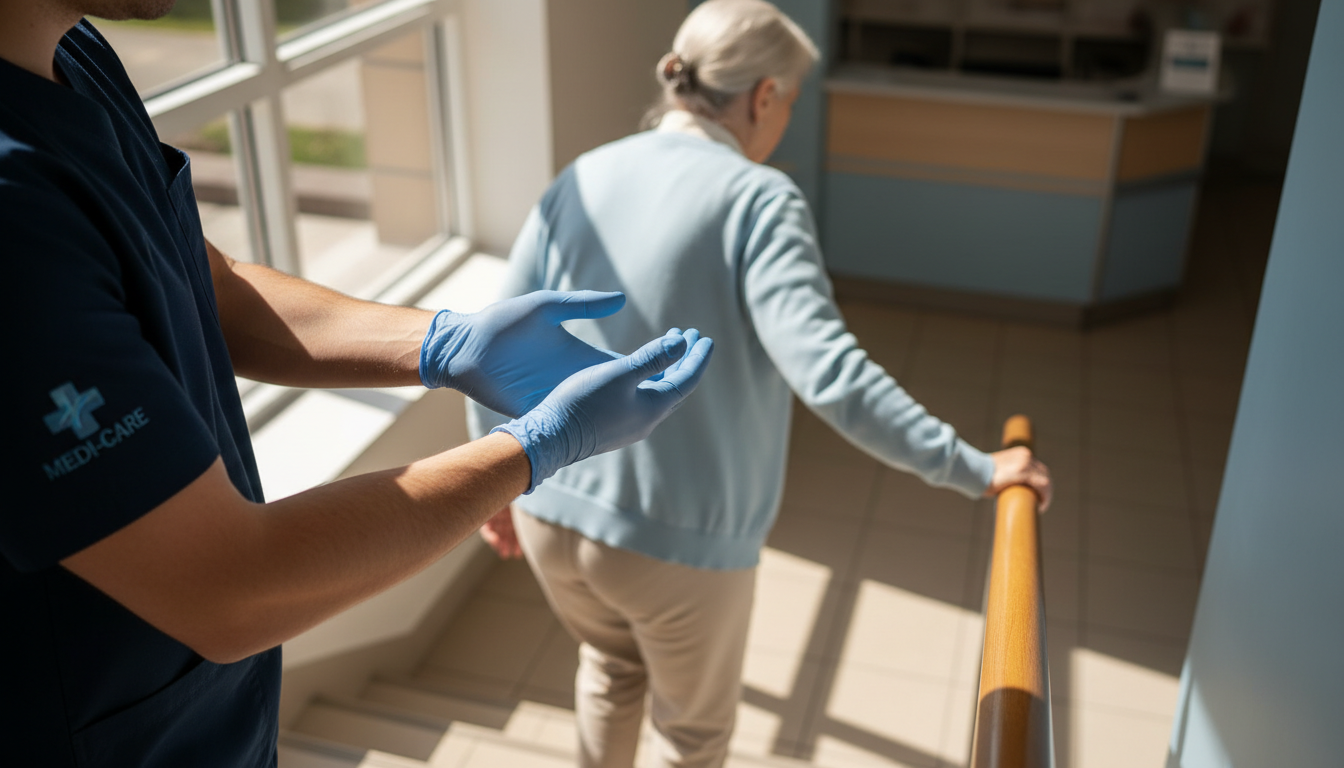
Sedation does not simply wear off the moment you wake up in the recovery room. Medications like Propofol and Midazolam continue to circulate in the bloodstream for hours after discharge, leading to a state of cognitive and physical lag. This often creates a false sense of sobriety where a patient feels alert but possesses the motor skills and reaction times of someone who is profoundly intoxicated. In California, operating a vehicle while under the influence of post-surgical sedatives is legally equivalent to a DUI. Local law enforcement treats medicinal impairment with the same severity as alcohol, making a professional private pay medical transportation service a legal necessity.
The physiological risks extend to simple movements. Post-operative patients are highly susceptible to orthostatic hypotension, a sudden drop in blood pressure that occurs when standing or climbing. When arranging transportation after outpatient procedure Orange County, patients must account for the fact that navigating a driveway or a flight of stairs can trigger dizziness or fainting. For residents in multi-level Newport Beach homes or hillside properties, this transition is particularly hazardous.
Professional hospital discharge transportation in Orange County provides the physical bracing required to manage these risks. Our team is specifically trained to assist with residential stairs, ensuring that the residual effects of anesthesia do not lead to a fall during the final steps of your journey. Using specialized senior transportation services provides the physical support that standard transit options simply cannot offer, bridging the gap between the vehicle and the safety of your own bed.
What to Expect with Professional NEMT from RideRx

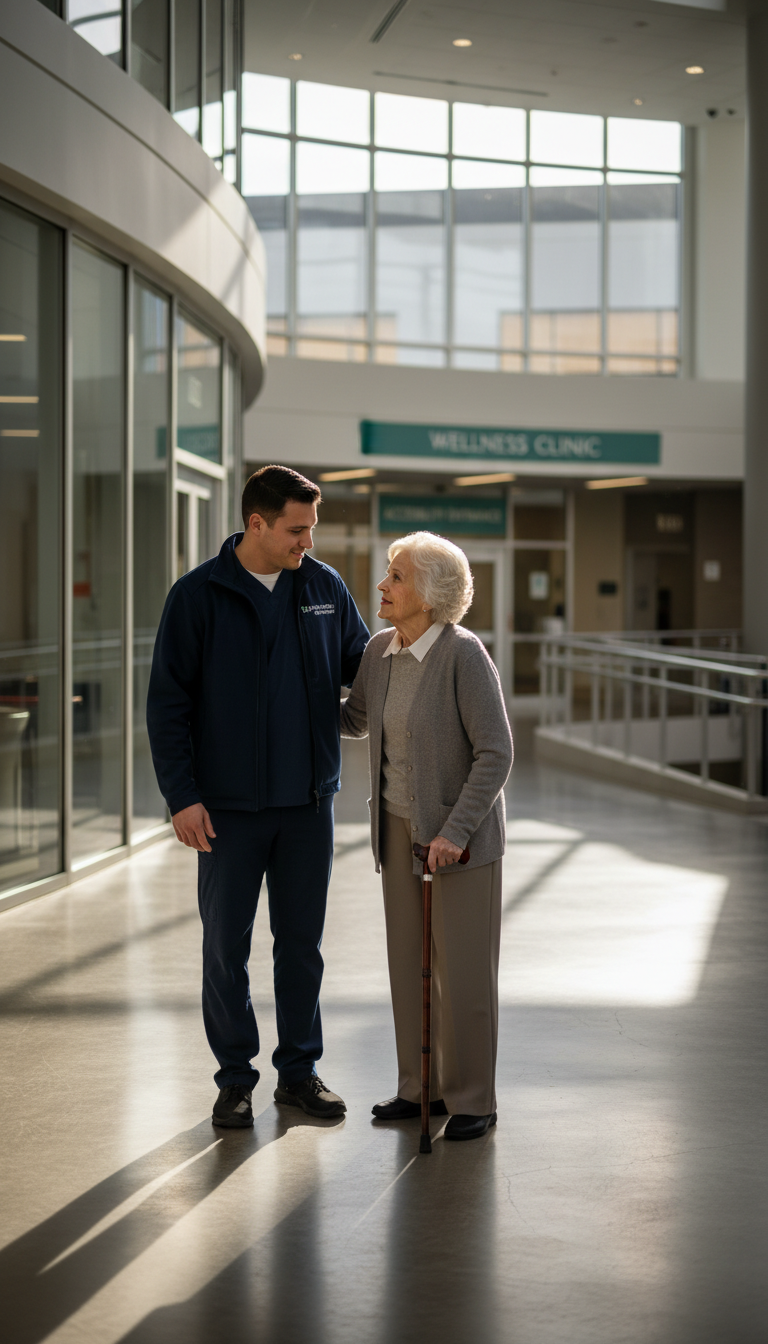
RideRx bridges the gap between clinical care and a safe arrival home through a specialized White Glove service model. Unlike standard transportation, our process begins inside the surgical center or hospital. Your driver enters the facility to meet you at the recovery bedside, directly coordinating with the discharge nursing staff. We assume the role of the designated responsible adult, accepting post-operative instructions and signing the formal release documentation required for hospital discharge transportation in Orange County.
Once discharge is authorized, our team provides physical stabilization for ambulatory patients or specialized assistance for those who are wheelchair bound. We guide you through the facility corridors to our vehicle, ensuring you are safely seated and secured for the commute. This level of private pay medical transportation is designed to mitigate the risks of orthostatic hypotension or fainting that often occur shortly after leaving a clinical setting.
The service concludes with a full residential transition. For patients returning to multi story homes or properties with complex entryways in Newport Beach, our drivers provide essential assistance with stairs. We do not leave until you are safely inside your residence and settled in a secure environment. This comprehensive approach to senior transportation services ensures that the final leg of your recovery is managed with the same level of professional care as the procedure itself, providing peace of mind for both the patient and their family members. By handling the logistical and physical challenges of the transition, we allow you to focus entirely on the healing process.
How to Arrange Your Post Procedure Ride in Newport Beach
Organizing transportation after outpatient procedure Orange County requires proactive planning to avoid day-of cancellations. While your medical team focuses on the clinical success of the treatment, you must ensure the logistics of your return home are finalized before you arrive at the facility. Following a specific checklist ensures that your discharge meets strict facility standards while prioritizing your physical safety.
Verify Facility Policy: Contact the surgical coordinator at your Newport Beach clinic to confirm their specific definition of a responsible adult. Verify that they recognize a professional NEMT provider for signing discharge documents and providing the required door through door assistance.
Schedule in Advance: Book your private pay medical transportation at least 48 hours before the procedure. This ensures vehicle availability and allows the dispatch team to note specific residential challenges, such as steep driveways or interior stairs common in local coastal homes.
Detail the Logistics: Provide the exact suite number and building wing of the surgical center. Because discharge times fluctuate based on recovery speed, giving the transport provider the scheduled start time of your surgery helps them anticipate the pickup window for hospital discharge transportation in Orange County.
Facilitate Nurse Coordination: Share the direct phone number for the recovery ward or nurse’s station. This allows the driver to communicate directly with clinical staff, ensuring they are inside the building and ready to assist the moment you are cleared for release.
Utilizing professional senior transportation services removes the stress of coordinating with friends or family who may not be able to meet the facility’s rigorous safety requirements. By following these steps, you ensure that the transition from the surgical suite to your home is managed with professional precision.
Securing a safe and comfortable journey home after your outpatient procedure is a vital part of your recovery process. Having a reliable plan in place ensures that you can focus entirely on healing without the stress of navigating traffic or logistics. If you feel that you would benefit from expert assistance during this transition, you can view our full range of specialized transportation services. We are here to provide the professional care and reliability you deserve as you return home to rest.