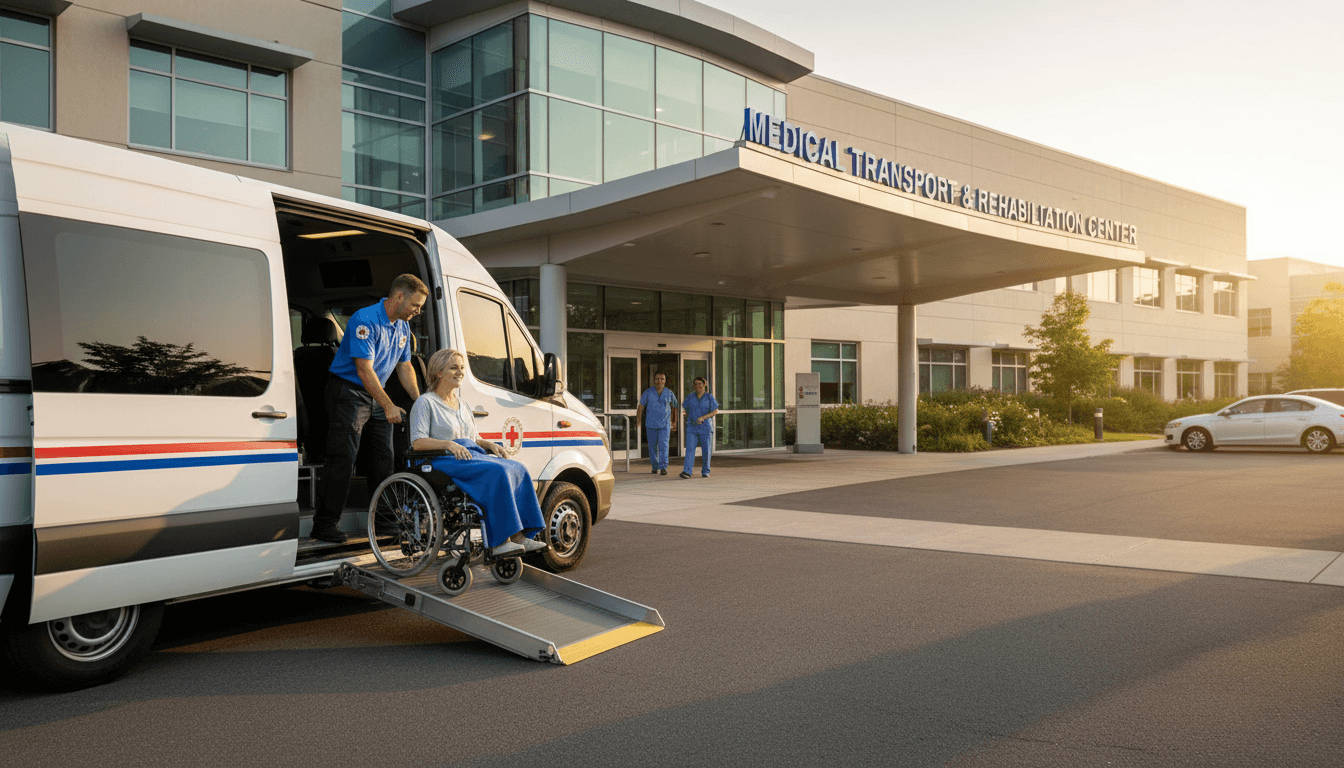

Hospital discharge transportation Orange County provides specialized transit options like non-emergency medical vehicles, senior-specific programs, and ambulatory or stretcher services to ensure a safe transition from the hospital to home. These professional services address patient mobility needs and medical vulnerability during the critical post-discharge period; they offer reliable alternatives to standard rideshares for those requiring extra assistance.
Leaving a hospital in Orange County should feel like a milestone toward recovery; yet for many patients and families, the logistics of the trip home often create unnecessary anxiety. Whether you are navigating the busy corridors of Hoag Memorial or discharging from a specialized surgical center in Irvine, the transition from a clinical setting to your front door is a critical period where safety cannot be compromised. Relying on standard rideshares or unprepared family members can lead to physical discomfort or even medical setbacks. This guide explores the essential components of hospital discharge transportation. It covers California patient rights, the various types of medical transit available locally, and how to effectively coordinate with discharge planners. By understanding these options, you can ensure a seamless journey that prioritizes health and dignity during those first vital hours of recovery.
The Critical Role of Professional Transport in the Recovery Process

The moment a patient exits a facility like Hoag Newport Beach or UCI Medical Center, they enter what clinical experts call the vulnerable transition period. This window is the most precarious stage of recovery. National data indicates that nearly 20 percent of patients face readmission within 30 days of discharge; these incidents often occur because the transition from clinical supervision to home care was poorly managed.
Professional hospital discharge transportation in Orange County is more than a simple commute. It represents the first critical step in a successful rehabilitation plan. Standard rideshare applications are designed for healthy, mobile passengers. These services operate on a curb-to-curb model, meaning the driver's responsibility ends the moment the car stops at the sidewalk. This approach lacks the medical oversight and physical assistance required for someone recovering from surgery or a major medical event.
A standard driver is not trained to recognize signs of distress or handle the specific needs of a patient who may still be feeling the lingering effects of anesthesia. Furthermore, they cannot assist with the physical challenges of a home environment, such as navigating narrow hallways or steps. Opting for private pay medical transport ensures that the patient is safely transferred from the hospital bed to their own armchair. By prioritizing a high standard of care during this transit, families can significantly reduce the risk of complications and ensure a smoother path to recovery.
Understanding California Hospital Discharge Laws and Your Rights
California law provides specific protections to ensure patients are not simply left at the curb without a plan. Under Senate Bill 1152, hospitals are mandated to follow a comprehensive discharge planning process. This legislation was primarily designed to prevent patient dumping, ensuring that every individual has a documented, safe destination before they leave the facility. If you are wondering, "Can a hospital discharge a patient who has nowhere to go in California?" the legal answer is no. Hospitals must identify a location where the patient can safely reside, whether that is a private home, a skilled nursing facility, or a licensed shelter.
Beyond just identifying a destination, the law requires hospitals to arrange a method of safe transport. This is a critical component of hospital discharge transportation in Orange County. The facility's responsibility does not end at the exit door; they must ensure the patient has a reliable way to reach their destination. For many, this is where private pay medical transport fills the gap, providing a level of physical assistance that a standard taxi or family vehicle cannot offer.
Managing expectations regarding timing is equally important for families. Patients often hear references to the 3-day rule and the 72-hour rule. In a hospital context, the 3-day rule typically refers to the requirement for a patient to have a three-consecutive-day inpatient stay for Medicare to cover subsequent care in a skilled nursing facility. Conversely, the 72-hour rule often pertains to the timeframe a hospital uses to determine if a patient should be officially admitted or kept under observation status. Being under observation can affect your discharge rights and out-of-pocket costs; it is vital to ask your case manager for clarification on your official status. Understanding these legal frameworks empowers families to advocate for a safe, coordinated transition home.
Types of Hospital Discharge Transportation Available in Orange County
Choosing the right vehicle for hospital discharge transportation Orange County depends entirely on the patient’s clinical status and physical limitations at the time of release. Facilities like St. Jude Medical Center in Fullerton or Mission Hospital in Mission Viejo will categorize patients based on their mobility needs to ensure safety during transit.
Transportation Type | Mobility Level | Common Use Case |
|---|---|---|
Ambulatory | Can walk with assistance or a walker | Post-op patients who are weak, dizzy, or prone to falls. |
Wheelchair | Requires specialized lift and securement | Spinal surgery recovery, limb casts, or chronic mobility issues. |
Stretcher Van | Must remain prone; no active monitoring | Non-emergency transfers where sitting is medically contraindicated. |
Ambulance (BLS/ALS) | Requires oxygen, IV, or vitals monitoring | Critically unstable patients or those needing active life support. |
Ambulatory transport is designed for individuals who are technically mobile but physically unstable. A driver provides a steady hand from the hospital room to the vehicle, ensuring the patient does not trip or overexert themselves while navigating the discharge lounge. This service is ideal for those who simply need a professional to monitor their stability during the walk to the car.
For patients who cannot self-transfer or have strict mobility restrictions following orthopedic surgery, wheelchair transportation in Orange County provides a hydraulic lift and floor-locking mechanisms. This eliminates the physical strain and risk of a fall that occurs when trying to pivot from a hospital chair into a standard car seat.
There is also a distinct difference between a stretcher van and a BLS ambulance. If a patient must remain prone but does not require active medical monitoring or oxygen titration, a stretcher van is the appropriate private pay medical transport choice. This offers the necessary comfort and position for recovery without the high cost of emergency-grade equipment that is unnecessary for a stable discharge.
How to Coordinate with Your Hospital Discharge Planner

Navigating the logistics of a hospital exit requires proactive communication with the facility’s social worker or case manager. These professionals manage the official discharge plan, but families should initiate the conversation early to ensure hospital discharge transportation Orange County services are arranged with precision. While the hospital may suggest their own contracted shuttles, these often provide only curb-to-curb service, which may be insufficient for a recovering patient.
Use this checklist to coordinate a smooth transition: 1. Identify your point of contact: Ask for the specific social worker or discharge planner assigned to the patient's case as soon as a discharge date is discussed. 2. Provide exact location details: RideRx requires the unit name, such as ICU, Orthopedics, or Cardiac, and the room number to meet the patient directly. 3. Specify medical needs: Note if the patient requires supplemental oxygen or has specific mobility limitations that require a hydraulic lift. 4. Describe the destination: Inform the dispatcher of any stairs, narrow entryways, or steep driveways at the home to ensure the proper equipment and personnel are prepared.
RideRx specializes in door-through-door service, a critical differentiator from standard hospital discharge transportation. Most hospital-contracted shuttles or taxis leave patients at the front entrance or curb, forcing the family to handle the final, often difficult, transfer into the home. Our team does not just wait at the sidewalk; we enter the facility to meet the patient at their bedside and stay with them until they are safely settled in their own armchair. This private pay medical transport model bridges the gap between clinical care and domestic comfort, ensuring the patient never feels abandoned during the transition.
The RideRx Difference: Safe Transitions for Newport Beach and Beyond
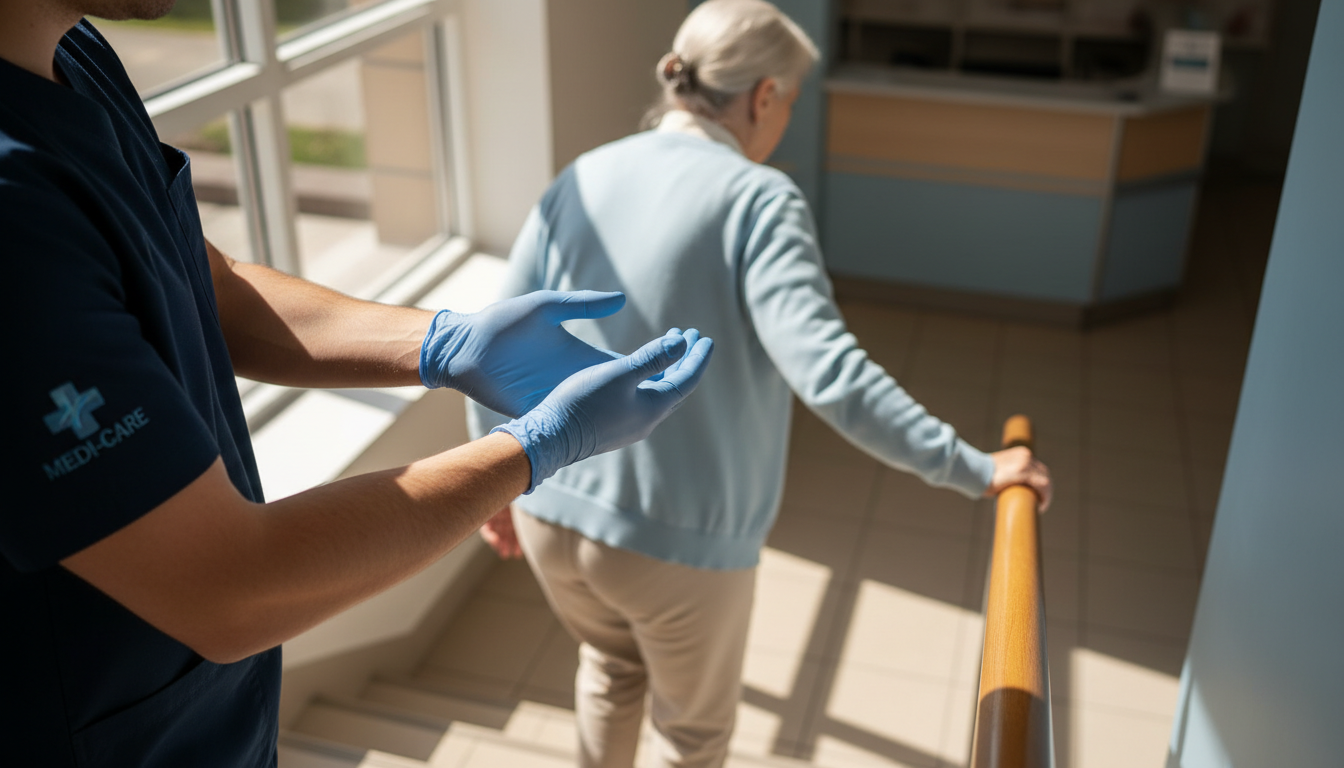
While many transport options stop at the hospital driveway, RideRx operates on a bed-to-armchair philosophy. We recognize that the most dangerous part of the journey is often the last fifty feet. In residential areas across Newport Beach and Huntington Beach, coastal homes frequently involve architectural challenges such as steep porch steps or multi-level layouts. We provide specialized assistance with stairs, a service that standard taxis and even many facility shuttles refuse to offer due to liability concerns. This physical support is a core component of our private pay medical transport, ensuring that the final transition into the home is as controlled as the clinical care received at the hospital.
Our drivers undergo rigorous training specifically focused on post-surgical safety. Patients leaving facilities in Irvine or Costa Mesa after orthopedic or cardiovascular procedures are often dealing with the lingering cognitive and physical effects of anesthesia. Our team is trained to monitor for signs of postural hypotension or dizziness, ensuring the patient remains stabilized during the transfer. This level of expertise distinguishes our hospital discharge transportation from generic alternatives.
Service Feature | Standard Rideshare | RideRx Medical Transport |
|---|---|---|
Pickup Point | Hospital Curb | Patient Bedside |
Medical Oversight | None | Trained for Post-Op Stability |
Stair Assistance | Not Permitted | Included Professional Support |
Final Destination | Sidewalk/Street | Inside Home Armchair |
By prioritizing a higher standard for wheelchair transportation in Orange County, we bridge the gap between the hospital exit and the start of home recovery. This hands-on approach eliminates the risk of a fall during the final handoff, providing families with the confidence that their loved one is safely settled, not just dropped off.
Cost and Insurance: Medi-Cal, Medicare, and Private Pay Options
Understanding the financial landscape of medical transit is essential for families in Orange County. One of the most frequent questions we receive is, "Will Medicare pay for my patient transport?" Generally, Medicare Part B only covers ambulance transportation when a patient’s condition is life-threatening or requires active monitoring during transit. For a standard hospital discharge to a private residence where an ambulance is not clinically required, Medicare rarely covers NEMT services.
For residents utilizing Medi-Cal transportation options, coverage is significantly more flexible. In California, many Medi-Cal plans, including CalOptima, cover non-emergency medical transportation if a physician provides a Physician Certification Statement (PCS). This document must verify that the patient's physical or medical condition prevents them from using standard public or private transportation. Additionally, some private PPO insurance plans may reimburse for hospital discharge transportation if the service is deemed medically necessary for a safe transition home after surgery.
Orange County also provides the Senior Non-Emergency Medical Transportation (SNEMT) program through the OCTA. This program offers subsidized rides for residents aged 60 and older who lack other means of transit. While SNEMT is a valuable community resource for recurring appointments, it operates primarily as a curb-to-curb service and often requires several days of advance notice. This makes it a difficult fit for hospital discharges, which often involve fluctuating timelines and a need for bed-to-armchair assistance.
Payment Category | Coverage Scope | Service Level |
|---|---|---|
Medicare | Medically necessary ambulances only | Bed-to-Bed (Clinical) |
Medi-Cal / CalOptima | NEMT with PCS authorization | Curb or Door-to-Door |
OCTA SNEMT | Subsidized for seniors 60+ | Curb-to-Curb; 2-3 day notice |
Private Pay | Self-funded or PPO reimbursement | Bed-to-Armchair; Same-day |
Costs for private pay medical transport typically consist of a base pickup fee plus a per-mile charge. For wheelchair transportation in Orange County, rates reflect the specialized hydraulic lift equipment and the additional time required for professional drivers to navigate stairs or assist the patient directly into their home. This out of pocket investment ensures immediate availability and a level of physical support that public programs cannot match.
What to Do If You Have No Ride Home After Surgery
Realizing you have no designated ride home after a surgery can trigger significant anxiety. Hospital protocols in Orange County are strictly designed to prevent unsafe departures. For any procedure involving anesthesia or sedation, facilities such as Hoag Newport Beach or Providence St. Joseph will legally refuse to discharge a patient to a standard rideshare or taxi. This refusal stems from liability and clinical safety protocols; a driver for a standard app is not qualified to ensure a patient makes it safely from the sidewalk into their home.
If you are without a ride, take these immediate steps: 1. Consult Social Services: Case managers can often explore Medi-Cal transportation options or hospital-funded grants for eligible patients. 2. Request Facility Transport Vouchers: Some departments maintain specific accounts with NEMT providers for vulnerable patients. 3. Secure private pay medical transport: This is the most reliable way to guarantee professional bedside to armchair assistance.
RideRx addresses this specific need by offering specialized hospital discharge transportation. We provide the hospital discharge transportation Orange County residents require when they live alone or lack local support. Our specialized wheelchair transportation in Orange County ensures you are never left at a curb. Instead, our team stays with you until you are safely through the door and settled in your home.
Ensuring a smooth transition from the hospital to your home is a vital part of the recovery process. By planning your discharge transportation ahead of time, you can avoid unnecessary stress and focus on your physical well-being. If you want expert help navigating these logistics, choosing professional Hospital Transport can make a significant difference. Our team at RideRx is here to provide the specialized care and reliability you deserve, allowing you to settle back into your routine with complete peace of mind.