Seniors in Orange County can access specialized transit through the Measure M2 Senior Mobility Program, non-emergency medical transport from providers like Abrazar and Age Well, and paratransit services like OC ACCESS. These transportation options for seniors Orange County ensure residents have reliable ways to reach medical appointments, senior centers, and essential community services.
Navigating the sprawling landscape of Orange County often becomes a complex challenge for seniors who no longer feel comfortable behind the wheel. When personal driving is no longer an option, the resulting gap in mobility can jeopardize health outcomes and diminish overall quality of life. Accessing reliable transit is not merely a matter of convenience; it is a critical component of maintaining independence and ensuring timely access to medical care. In this guide, we provide a practical overview of the transportation ecosystem available to Orange County residents. You will explore the nuances of the OCTA Senior Mobility Program, the benefits of specialized non emergency medical transportation, and the safety considerations of modern rideshare apps. Our goal is to help you navigate these options so you can select the most appropriate level of support for your unique circumstances.
Navigating Senior Mobility in Orange County
Orange County is defined by a car-centric infrastructure that often prioritizes long freeway commutes over pedestrian accessibility. For the growing population of older adults in Newport Beach and the surrounding coastal communities, this environment presents distinct challenges. Finding the right transportation options for seniors Orange County offers requires an understanding of the different tiers of service available, from public initiatives to private medical transit.
Local residents frequently face more than just traffic. Navigating expansive medical complexes, such as the professional plazas surrounding Hoag Hospital, or accessing clinics in multi-story buildings requires a level of support that goes beyond a standard taxi drop-off. The physical barrier of a flight of stairs or the distance from a parking lot to a treatment room can become a significant deterrent to seeking regular care.
Choosing the correct level of mobility support is a vital component of maintaining health and independence. While some individuals remain fully ambulatory and can manage fixed-route buses, others require reliable transit for ambulatory and wheelchair-bound patients to ensure they arrive at appointments safely. Providing safe and professional care during these transitions is not just about convenience; it is a practical necessity for those recovering from surgery or managing chronic conditions like kidney disease that require recurring treatment.
Public Transit and the OCTA Senior Mobility Program
The foundation of public transportation in our region is the Orange County Transportation Authority (OCTA). For seniors who remain active and comfortable navigating standard transit schedules, OCTA fixed-route buses offer a cost-effective solution with significantly reduced fares for those 65 and older. However, recognizing that a standard bus stop may be too far for some to reach on foot, OCTA established the Senior Mobility Program (SMP). This initiative bridges the gap between traditional bus routes and the more restrictive paratransit services.
The SMP is a collaborative effort where OCTA provides funding to participating cities and non-profit organizations to create localized transportation options for seniors Orange County residents can rely on for community-based trips. Cities like Newport Beach and Huntington Beach participate in this program, often utilizing small buses or vans to transport residents to senior centers, grocery stores, and local medical offices within their specific geographic boundaries.
It is important to understand that these programs generally operate on a curb-to-curb basis. This means the driver will pick up and drop off passengers at the street level. These services are best suited for ambulatory seniors who are mobile enough to walk from their front door to the vehicle without physical assistance and who do not require help navigating stairs or entering medical facilities. While the SMP provides a vital link for social and wellness activities, it is distinct from the safe and professional care required by those with more complex mobility needs. For individuals who can manage the logistics of getting to the curb independently, these city-sponsored shuttles offer a practical way to maintain local independence.
Low Cost and Non Profit Medical Transportation in OC
For residents who need targeted help getting to doctors but cannot afford private transport, several grant-funded programs provide vital assistance. The Senior Non-Emergency Medical Transportation (SNEMT) program, administered by the Orange County Office on Aging, is a primary resource for low-income seniors. This program specifically targets individuals 60 and older who lack other means of transport for medical purposes. Similarly, organizations like Abrazar and Age Well Senior Services operate dedicated fleets. Age Well, for example, focuses heavily on South County cities, providing local transit to clinics and nutrition sites.
While these transportation options for seniors Orange County provides are essential, they come with operational constraints. Most are funded by Title III-B of the Older Americans Act or local grants; consequently, they often require a rigorous intake process to verify eligibility. Scheduling is rarely immediate; patients typically need to book their rides one to two weeks in advance. Furthermore, these services generally operate within set business hours, which may not accommodate early morning dialysis or late afternoon physical therapy sessions.
The most significant limitation for many families is the level of physical support provided. These non-profit programs are typically curb-to-curb. Drivers are often prohibited from entering a patient’s home or assisting them through the heavy doors of a medical plaza. For those requiring reliable transit for ambulatory and wheelchair-bound patients, especially when navigating stairs or requiring safe and professional care through a facility entrance, these subsidized models may not offer enough hands-on assistance. They serve as a critical safety net for those who are relatively mobile, but they leave a gap for patients with more intensive physical needs.
Specialized Non-Emergency Medical Transportation (NEMT): When You Need Extra Support
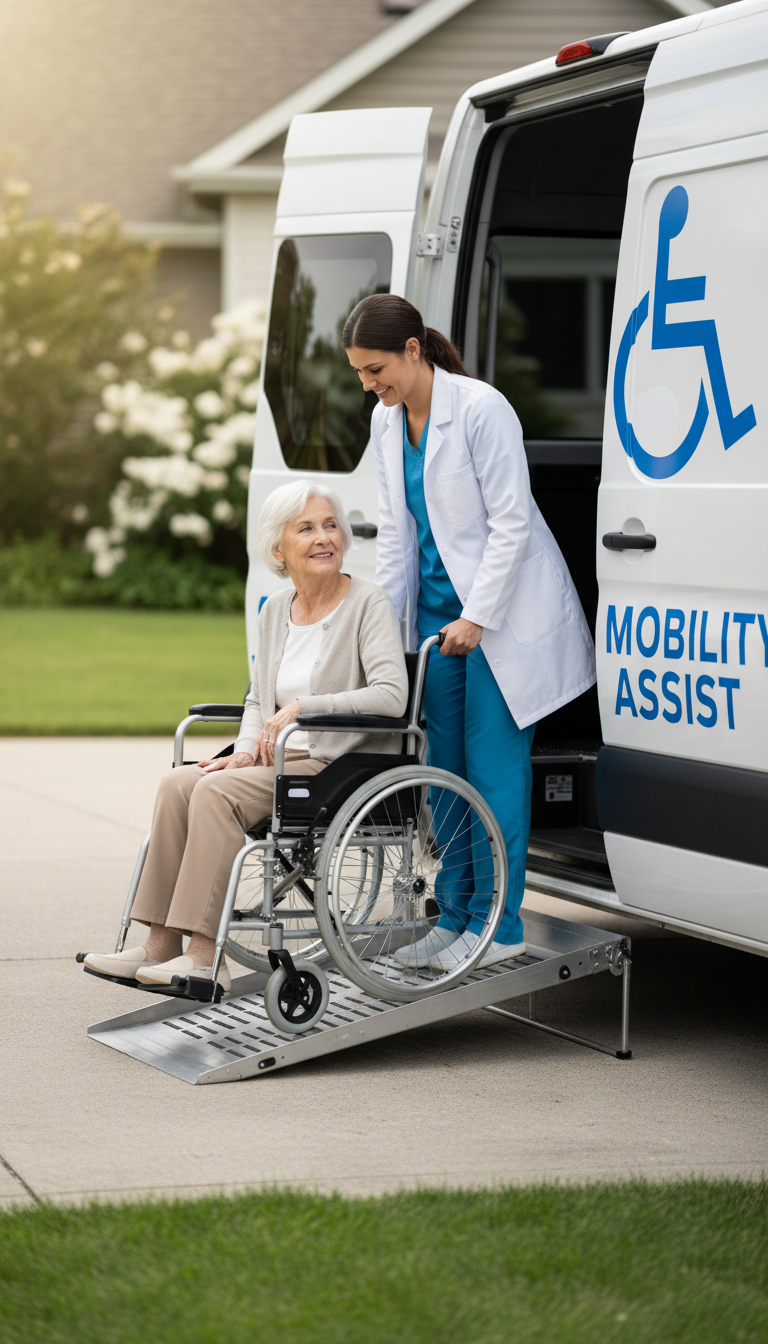
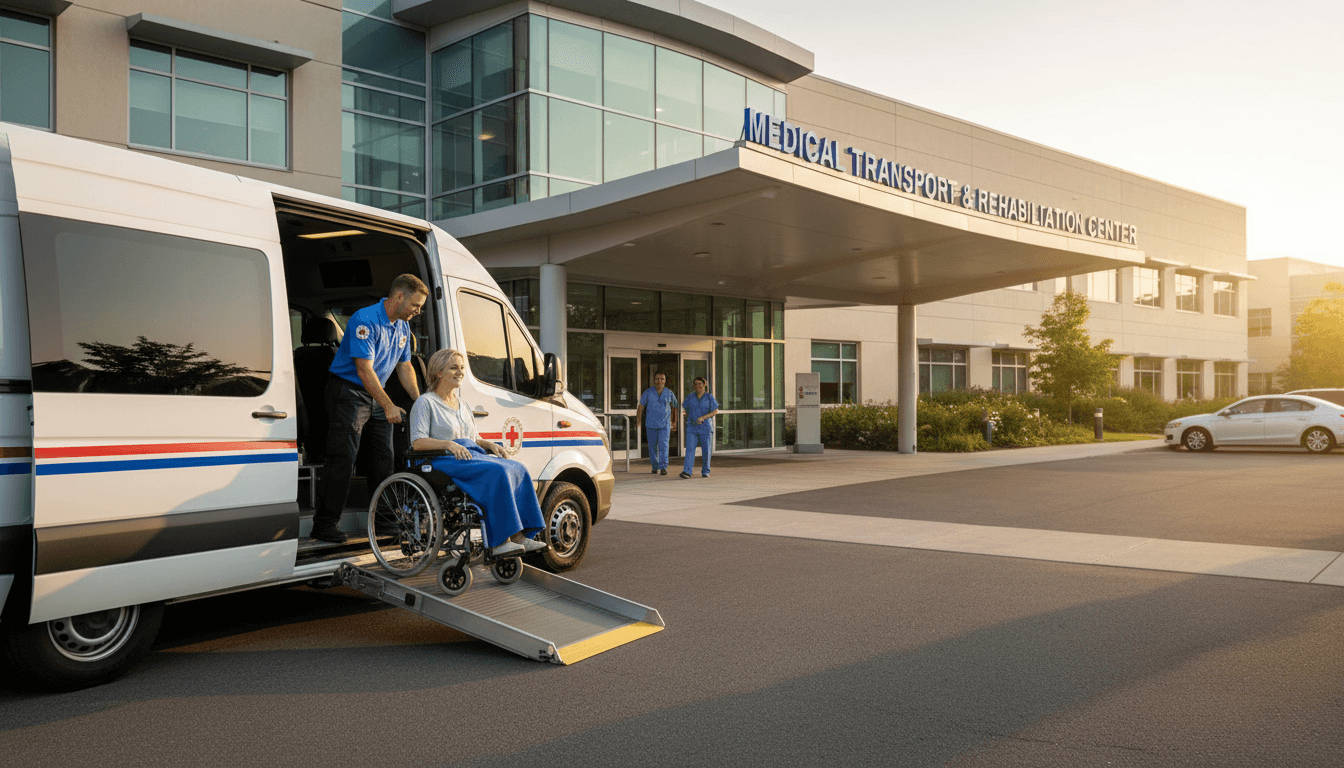
While curb-to-curb services satisfy basic mobility, many medical situations require a hand-to-hand level of responsibility. Specialized non-emergency medical transportation (NEMT) addresses the gaps left by traditional transportation options for seniors Orange County families often encounter when dealing with complex health needs. At RideRx, the focus shifts from simply moving a vehicle to moving a person safely. This includes providing reliable transit for ambulatory and wheelchair-bound patients using vehicles specifically equipped with ramps or specialized seating for those with limited core strength.
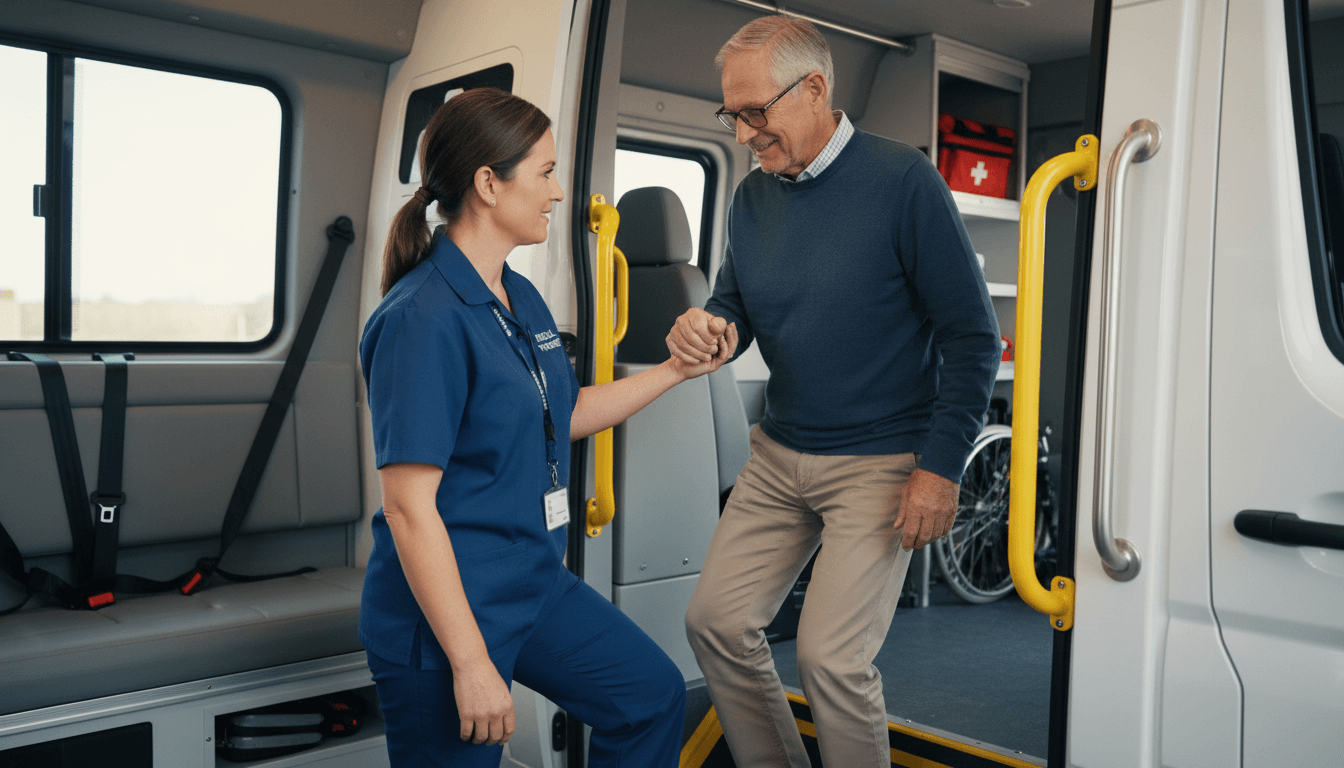
Beyond the hardware, the defining characteristic of NEMT is door-through-door assistance. For a patient visiting a specialist at one of the dense medical plazas in Newport Beach, this service means the driver assists them from their living room, helps them navigate stairs or porch steps, and ensures they are safely checked in at the clinical reception desk. This differs significantly from public or non-profit transit where the driver remains with the vehicle. When navigating the sprawling corridors of facilities like Hoag Hospital, having a trained professional to manage the transition through heavy doors and elevators is essential for preventing falls and managing patient anxiety.
This high-touch approach is a clinical necessity for individuals undergoing recurring treatments like dialysis or those in post-surgical recovery. These procedures often leave patients physically drained, lightheaded, or unsteady. In these instances, a standard drop-off is insufficient and potentially dangerous. NEMT provides safe and professional care by implementing a hand-to-hand protocol, ensuring that the patient is successfully transferred to a nurse or family member rather than being left at a curb. This level of support maintains the continuum of care from the home to the clinic, prioritizing the patient's physical stability throughout the entire journey.
Rideshare for Seniors: Is Uber or Lyft a Safe Option?
Families researching transportation options for seniors Orange County often ask, "What is Uber for seniors called?" While there is no single dedicated app, services like Uber Health and Lyft Assisted allow healthcare providers or family members to coordinate rides for those who may not use a smartphone. These platforms provide a layer of convenience for tech-savvy, fully ambulatory adults, but they operate on a fundamentally different service model than medical transit.
Standard rideshare drivers are independent contractors without specialized training in patient mobility or fall prevention. They are generally prohibited by corporate policy from entering a private residence or providing physical weight-bearing assistance to a passenger. This creates a significant safety gap for individuals who are unsteady or those who use mobility aids. A rideshare driver cannot help a senior navigate a flight of stairs, assist with a complex wheelchair transfer, or offer the safe and professional care needed during the transition from a living room to the vehicle.
For a patient in Newport Beach returning from a tiring physical therapy session, a curb-side drop-off introduces unnecessary risk. Unlike specialized reliable transit for ambulatory and wheelchair-bound patients, rideshare services do not provide door-through-door support. This distinction is critical; the transition from the curb to the front door is where the majority of mobility-related accidents occur. When a senior requires physical stability and a watchful eye, the limitations of standard rideshare become a liability.
Assessing Your Needs: Choosing the Right Level of Care

Selecting the most appropriate transportation options for seniors Orange County families trust requires matching the individual’s physical state with the complexity of their destination. A trip to a social outing, such as meeting family for lunch at Fashion Island, carries different risks than a recurring physical therapy session where post treatment fatigue is likely. Use the following criteria to evaluate the necessary level of oversight.
Feature | Public Transit / SMP | Rideshare (Uber/Lyft) | Specialized NEMT (RideRx) |
|---|---|---|---|
Mobility Level | Fully Ambulatory | Ambulatory (no equipment) | Wheelchair or Limited Mobility |
Destination | Social / Local Errands | Social / Light Errands | Clinical / Post-Surgical |
Support Level | Curb-to-Curb | Curb-side only | Door-through-Door |
Physical Aid | None | None | Assistance with Stairs / Transfers |
If the individual can navigate the walk from their front door to the street independently, public or curb-to-curb programs are often sufficient. However, if the patient requires reliable transit for ambulatory and wheelchair-bound patients, especially when stairs or heavy medical facility doors are involved, specialized NEMT is the only safe choice. For those needing safe and professional care to ensure they are checked into an appointment rather than just left at a drop-off zone, contact our team today to coordinate a tailored transport plan.
Senior Transportation FAQs: Costs, Medicare, and Assistance
Understanding the financial landscape of transportation options for seniors Orange County offers is essential for long-term planning. Costs and coverage vary significantly depending on the level of assistance required and the specific insurance provider involved.
### Does Medicare pay for senior transportation? Original Medicare (Parts A and B) generally does not cover non-emergency medical transportation. It is primarily reserved for ambulance services in emergency situations where other transport would endanger the patient's health. However, many Medicare Advantage (Part C) plans in Orange County now include NEMT benefits as a supplemental service. These plans may cover a set number of one-way trips per year to approved medical providers. Patients should review their specific plan Evidence of Coverage or speak with their provider to confirm if NEMT is a covered benefit.
### Clarifying the "$3,000 Senior Assistance Program" Many residents encounter online advertisements regarding a $3,000 grant for senior assistance. It is important to approach these claims with caution. While there are state-funded programs like the Medi-Cal Multipurpose Senior Services Program (MSSP) that provide care coordination, there is no flat $3,000 cash grant for transportation. To avoid scams, seniors should rely on verified resources through the Orange County Office on Aging or the Senior Non-Emergency Medical Transportation (SNEMT) program. These programs provide subsidized rides rather than direct cash payments.
### Free and Low-Cost Local Alternatives For those seeking budget-friendly solutions for social or wellness trips, several localized options exist:
City-Specific Shuttles: Programs like the OASIS Senior Center shuttle in Newport Beach provide low-cost or free local transit for residents to the center and nearby grocery stores.
Non-Profit Shuttles: Organizations such as Age Well Senior Services offer donation-based rides for specific nutrition sites and medical appointments within their service areas.
While these free services are excellent for community engagement, they often lack the capacity for door-through-door assistance. When a patient requires reliable transit for ambulatory and wheelchair-bound patients to ensure safe and professional care during complex medical transitions, private NEMT remains the most dependable choice. For a detailed quote on tailored mobility support, contact our team today.
Finding the right transportation in Orange County ensures that seniors maintain their independence and health. Whether you choose public transit or a local community shuttle, the goal is always safety and reliability. However, some journeys require extra care and specific equipment. If you want expert help navigating your non-emergency medical trips, exploring professional Services can provide the peace of mind you need. Having a dedicated team ensures every ride is comfortable, timely, and focused entirely on your specific mobility requirements.