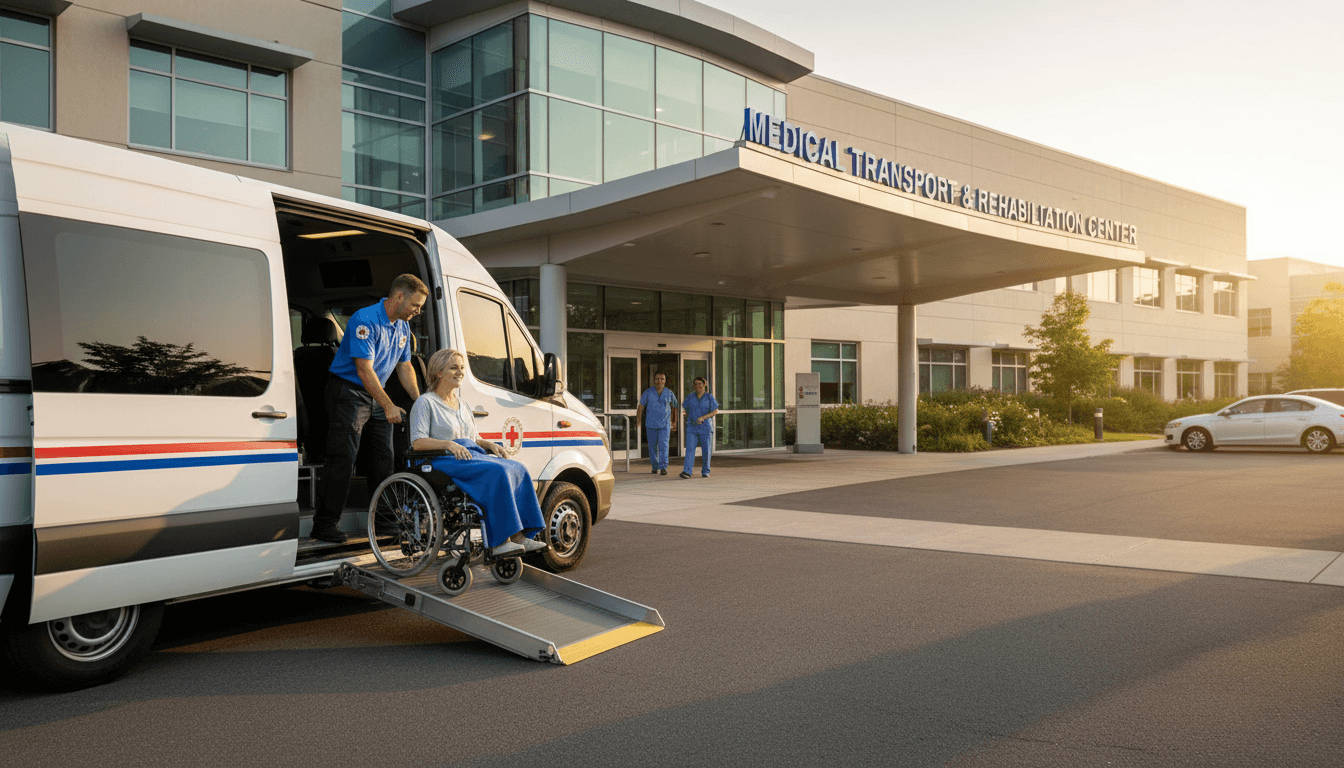

Residents can access reliable medical transportation for people with disabilities Orange County through programs like Senior Non-Emergency Medical Transportation (SNEMT), Medi-Cal services, and ADA-compliant private providers. These services ensure safe travel to medical appointments using specialized vehicles equipped with wheelchair lifts and ramps; they are strictly regulated by state safety and accessibility standards to protect passenger rights.
Navigating Orange County for medical appointments when you or a loved one lives with mobility challenges often feels like an exhausting, uphill battle. Standard rideshare apps rarely offer the specialized equipment needed, while public paratransit services can be unpredictable and physically taxing for those with complex needs. Reliable transportation is not merely a convenience; it is a fundamental pillar of healthcare access and personal dignity. When transit barriers lead to missed appointments, health outcomes suffer and stress levels for families in Newport Beach and beyond rise. This guide explores your legal rights under ADA laws and highlights the functional differences between public and private transport options. You will learn what to expect during a professional wheelchair transport, how to navigate insurance coverage, and practical booking tips to ensure every journey is both safe and seamless.
Understanding Your Rights: ADA Laws and Medical Transportation in California
Navigating the legal landscape of medical transportation for people with disabilities in Orange County begins with understanding the Americans with Disabilities Act (ADA) and California’s rigorous civil rights protections. These laws ensure that every individual, regardless of mobility level, has the right to safe and equal access to transit. Federal regulations and state mandates require that providers maintain equipment and protocols that accommodate wheelchairs and other mobility aids without discrimination.
A critical, often misunderstood aspect of these protections involves service animal policies. Under 49 CFR Part 37, Section 37.167(d), transportation providers must allow service animals to accompany individuals in both vehicles and facilities. Many passengers are unaware that a provider cannot lawfully deny service based on a driver’s personal allergies, religious objections, or a generalized fear of animals. Because these animals are trained to perform essential tasks for their handlers, they are considered medical necessities rather than pets, and their presence is protected by law.
While public paratransit meets these bare legal minimums, private non-emergency medical transportation (NEMT) like RideRx provides a level of individualized accommodation that exceeds standard requirements. Public transit rights focus on broad accessibility, yet they often lack the nuance required for complex transfers or specialized care. For those exploring private pay medical transportation, the benefit lies in a service that accounts for the specific physical layout of your home and the medical facility. RideRx views the ADA as the foundation of service, ensuring that safety and dignity remain at the forefront of every trip through South Orange County.
Common Barriers to Accessible Transit: Why Standard Rideshares Fall Short

Standard rideshare platforms have revolutionized general transit, but they frequently fail when addressing the specific transportation problems for disabled people. The primary issue is the curb to curb service model. For a passenger in a wheelchair or someone with limited mobility, being dropped off at a sidewalk in front of a sprawling medical complex in Irvine is only the beginning of the challenge. These platforms generally do not require drivers to assist passengers into the building, let alone help them navigate to a specific suite on the third floor of a professional plaza.
In contrast, specialized wheelchair transportation in Irvine and Newport Beach prioritizes door to door or even bed to bed service. This distinction is critical for safety and health outcomes. Navigating the modern, multi story medical buildings common in South Orange County involves managing heavy doors, complex elevator banks, and long corridors. A standard driver lacks the training and equipment to provide the physical support necessary for these transitions.
Furthermore, the presence of stairs at a private residence or a clinic can create an immediate barrier. Most on-demand services will decline a trip if it involves any degree of manual stair assistance, leaving patients stranded. RideRx focuses on these high touch points, providing professional assistance with stairs and ensuring that the transition from the vehicle to the medical professional is seamless. This level of dedicated care addresses the physical and logistical gaps that standard apps ignore, ensuring that medical transportation for people with disabilities Orange County remains a reliable link to necessary healthcare rather than a source of stress.
Comparing Your Options: Public Paratransit vs. Private NEMT in Orange County
Choosing the right transit provider requires balancing cost against the level of support and reliability needed for specific medical conditions. In Orange County, the primary public option is OCTA Access, a paratransit service that provides shared-ride transit for individuals who cannot use fixed-route buses. While OCTA Access is a cost-effective solution for many, it operates under a shared-ride model. This means passengers often face pickup windows of 30 minutes or more and may spend extended time in the vehicle as it navigates multiple stops across the county. For a patient traveling from Mission Viejo to a specialist in Newport Beach, this unpredictability can be physically taxing and may lead to missed appointments.
The following table outlines the key differences between these service models:
Feature | OCTA Access (Public Paratransit) | Private NEMT (RideRx) |
|---|---|---|
Service Type | Shared-ride; multiple stops | Dedicated, private vehicle |
Arrival Time | 30-minute pickup window | Precise, scheduled arrival |
Assistance Level | Curb-to-curb or door-to-door | Door-to-door or bed-to-bed |
Route | Optimized for multiple riders | Direct to your destination |
Support | Minimal physical assistance | Hands-on, including stairs |
For residents requiring private pay medical transportation, the shift from public transit to a private NEMT model like RideRx addresses the critical need for punctuality. This is particularly vital for dialysis patients or those attending physical therapy, where arriving late can disrupt a strictly timed treatment schedule. Unlike public options, RideRx provides dedicated one-on-one care, ensuring that the driver stays with the patient through the transition from the home to the clinic.
In South Orange County, where traffic patterns on the I-5 or the 405 can be erratic, having a professional service that prioritizes a single passenger’s schedule provides a necessary layer of security for medical transportation for people with disabilities Orange County. While some may qualify for Medi-Cal transportation options, those seeking a premium, reliable experience often prefer the directness and specialized assistance inherent in private care. This individualized focus is especially beneficial for those utilizing wheelchair transportation in Irvine who cannot afford the delays or physical strain of a shared public route.
What to Expect During Your Specialized Wheelchair Transport
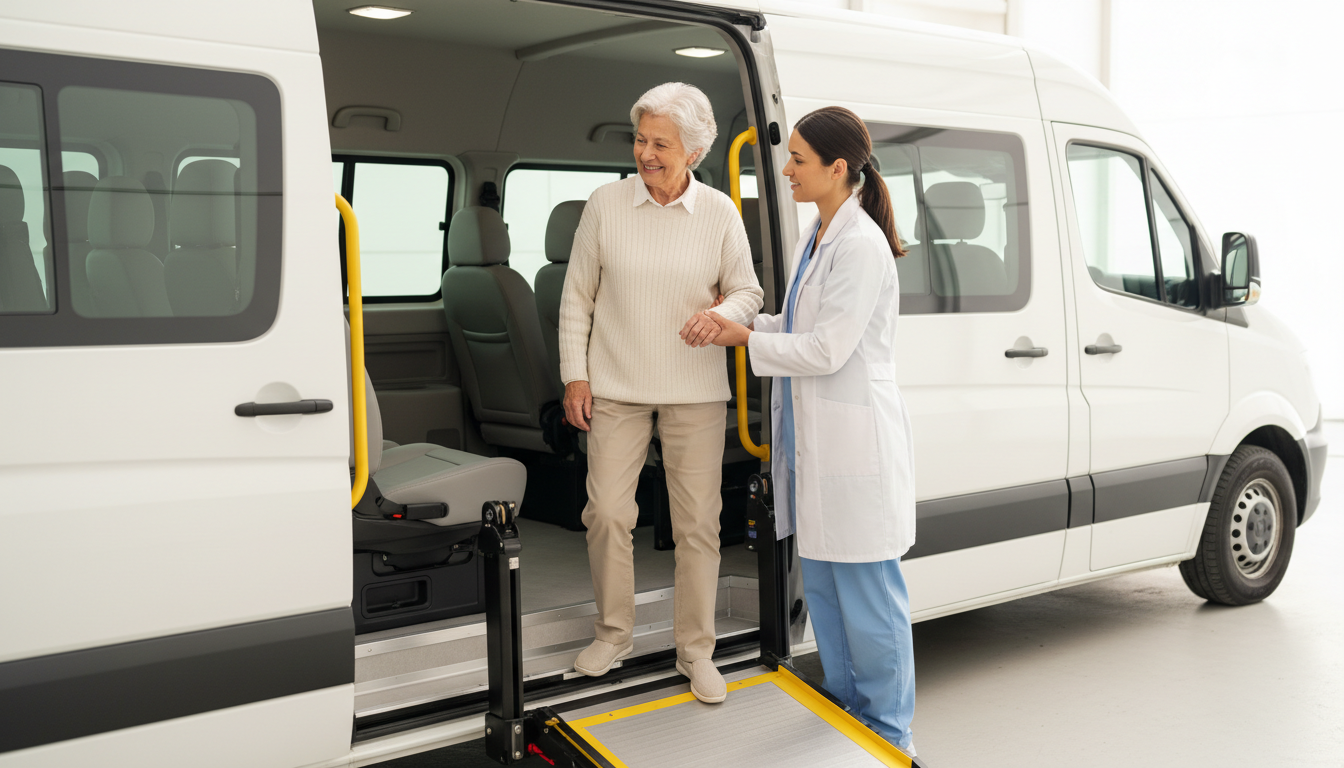
The safety of specialized transport hinges on rigorous technical protocols that ensure the passenger remains secure throughout the journey. When considering the correct protocol when using a wheelchair for patient transport, the industry standard relies on a 4 point tie down system. These heavy duty straps anchor the frame of the wheelchair directly to the vehicle floor, preventing lateral or forward movement during sudden stops or turns. A separate shoulder and lap belt system, similar to a standard car seatbelt, provides additional protection for the occupant.
Ramp safety is equally critical. Professional transporters use commercial grade, anti slip ramps with side rails to prevent accidental runoffs. Drivers are trained to maintain physical control of the wheelchair at all times during the ascent and descent, ensuring a smooth transition between the pavement and the vehicle interior. For those utilizing wheelchair transportation in Irvine, these mechanical safeguards are paired with manual assistance.
RideRx drivers manage the entire transition into medical facilities, navigating elevators and hallways to ensure the patient reaches their specific appointment desk. This expertise is particularly beneficial for ambulatory patients who may not use a wheelchair but require steadying assistance, and for those attending recurring treatments where consistency in care reduces anxiety. This meticulous approach defines high quality medical transportation for people with disabilities Orange County, turning a complex logistical task into a safe, predictable routine.
Does Insurance Cover Disability Transportation in Orange County?

Understanding the financial side of specialized transit is often the most complex hurdle for families. A common misconception is that standard Medicare covers all medical trips. In reality, Original Medicare (Part B) typically only pays for emergency ambulance services. However, many Medicare Advantage plans in Orange County now include supplemental benefits for non-emergency medical transportation. It is essential to review your specific Evidence of Coverage document to see if these benefits apply to recurring appointments like dialysis or wound care.
For those enrolled in Medi-Cal, coverage is managed through CalOptima in Orange County. They offer Medi-Cal transportation options for members who have a documented medical need that prevents them from using public transit. This usually requires a Physician Certification Statement (PCS) form submitted by your doctor. While these programs are vital, they often come with strict authorization requirements and may limit your choice of providers.
Plan Type | Typical NEMT Coverage | Requirements |
|---|---|---|
Original Medicare | Rarely covered | Only emergency or specific medical necessity |
Medicare Advantage | Often included | Varies by plan; check supplemental benefits |
CalOptima (Medi-Cal) | Covered | Physician Certification Statement (PCS) required |
Private Pay | Fully flexible | No medical authorization needed |
Many families find that private pay medical transportation offers the most reliable solution when insurance criteria are too narrow. Choosing a private option ensures you receive the high-level support mentioned earlier, such as assistance with stairs or navigating deep into medical complexes. This is particularly relevant for those needing wheelchair transportation in Irvine where punctuality and specialized care outweigh the complexities of insurance billing. For medical transportation for people with disabilities Orange County, verifying benefits starts with a direct call to your plan provider to ask specifically about Non-Emergency Medical Transportation benefits.
Booking Tips for Families and Caregivers in Newport Beach
Managing the logistics of medical appointments while balancing a career is a common challenge for caregivers in South Orange County. Streamlining the booking process for medical transportation for people with disabilities Orange County requires gathering specific technical details to ensure a seamless handoff. When contacting a dispatcher, have the exact dimensions of the mobility device ready. This includes the width and length of the wheelchair, as well as the combined weight of the passenger and the chair, which is essential for ensuring vehicle ramp compatibility and safety.
Providing detailed information about the physical environment at both ends of the trip prevents delays. If a Newport Beach residence has a porch with three steps or a steep driveway, sharing these details upfront allows the transport team to prepare for manual assistance. Similarly, identifying specific entrances at major local facilities, such as the Sue & Bill Gross Women’s Pavilion at Hoag or specific specialty suites at UCI Health, allows the driver to plan the most efficient route and drop-off strategy.
Information to Prepare | Why It Matters |
|---|---|
Chair Width and Length | Ensures the vehicle ramp can accommodate the device safely. |
Stair Count and Type | Allows the team to deploy appropriate staff for manual assistance. |
Medical Building Entrance | Minimizes time spent navigating large campuses like Hoag Newport Beach. |
Passenger and Chair Weight | Critical for calculating safety tolerances on equipment. |
Choosing private pay medical transportation provides the working caregiver with significant peace of mind by delegating the heavy lifting of facility navigation. Instead of worrying about a loved one navigating complex elevator banks alone, families can rely on a professional to guide them directly to the clinical check-in desk. This specialized level of wheelchair transportation in Irvine and Newport Beach ensures that the focus remains on the patient’s recovery rather than the obstacles of the transit itself.
Understanding your rights and transportation options in Orange County is the first step toward maintaining your independence and health. Navigating these systems can feel overwhelming, but you do not have to manage it alone. If you want expert help ensuring your next trip is safe and comfortable, our team is ready to support you. For those specifically seeking reliable Wheelchair Transportation in the local area, RideRx provides a professional and compassionate experience. We are here to help you move through the community with confidence.